

As artificial intelligence (AI) continues to redefine the boundaries of learning and creativity, universities around the world are racing to understand its impact on human development. In Indonesia, that conversation came vividly to life at Universitas Persada Bunda Indonesia (UPBI), where a recent seminar drew students, educators, and technologists into a lively discussion about how AI is transforming education and personal growth.
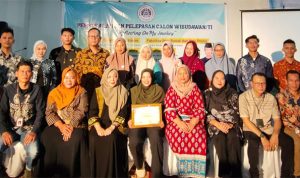
Held in collaboration with EduForAll, the event titled “Artificial Intelligence (AI): Opportunities, Risks & Ethical Use for Education and Self-Growth” brought together participants from multiple faculties eager to explore both the promise and the pitfalls of emerging technology, held at UPBI Campus, Jalan Diponegoro 42 Pekanbaru, Monday (11/10/2025).
Two speakers led the conversation: M. Haykal Amiruddin, a Growth Marketing at Admiral systems Singapore, and Livia Octaviani Jufri, S.S., M.A., founder of EduForAll. They were joined by Dr. Lelly Zuyana, Dean of the Faculty of Letters, alongside the Vice Rector for Academic Affairs and several lecturers who underscored the relevance of ethical AI use in higher education.
In his opening presentation, Haykal traced the accelerating trajectory of AI and its integration into everyday life, from data-driven learning platforms to creative applications.
“AI brings extraordinary opportunities, but also complex challenges, especially around ethics, regulation, and accountability. The real question is not whether we should use AI, but how we can use it responsibly,”he told the audience
Livia Jufri followed with an engaging session on the foundations of AI and its applications in education. She urged students to think critically about their relationship with technology. “AI should strengthen our capacity to think, not replace it. We must set clear boundaries, or risk losing the very analytical skills that make learning meaningful,” she said.
The discussion that followed was as animated as it was insightful. Students raised questions about AI’s role in classrooms, the threat of misinformation caused by AI hallucination, and the ethical dilemmas of automation. Both speakers emphasized the need for media literacy, transparency, and ethical reflection in digital education.
Dr. Lelly Zuyana, reflecting on the session afterward, praised its timeliness. “This topic could not be more relevant,” she said. “We hope to see more specialized discussions, for instance, exploring AI’s use in digital storytelling or language learning. It’s important that students learn to engage with technology critically, not just consume it.”
For many students, the seminar was a wake-up call. Viny, a fifth-semester English Literature student, said she realized the importance of maintaining self-control in the digital age. “AI is incredibly useful,” she noted, “but we can’t depend on it entirely. We have to be the ones in control of technology, not the other way around.”
Arifmon, a student from the Faculty of Law, echoed that sentiment from a legal perspective. “AI opens up issues like plagiarism and data ethics. Understanding where information comes from is just as important as knowing how to use it,” he said.
The UPBI–EduForAll seminar concluded with renewed energy, not only for the potential of AI but for the values that must guide its use. In a time when algorithms are rewriting the way people learn, communicate, and create, this conversation reminded students that the essence of education remains profoundly human.
As universities worldwide grapple with questions about AI’s ethical frontiers, Indonesia’s young scholars are stepping forward, ready to ensure that technology serves knowledge, not the other way around.
Reporter: Randi Putra Darmawan



Komentar